
Endodontic Instruments Guide: Explorers, Pluggers, Spreaders & Excavators
Endodontic treatment requires a combination of precision, visibility and controlled instrument handling.
Although rotary and powered systems are widely used in modern dentistry, professional hand instruments remain important in many endodontic procedures.
Explorers, pluggers, spreaders, excavators and specialized hand tools are designed for different stages of root canal treatment.
For dental distributors and private-label brands, understanding these categories helps when building a complete endodontic product range.
What Are Endodontic Instruments?
Endodontic instruments are dental tools used during root canal procedures and related clinical workflows.
Some are designed for examination and access, while others are used for manipulation, condensation or controlled material placement.
Working-end design is particularly important because endodontic instruments often require fine geometries.
Endodontic Explorers
Endodontic explorers typically use slender working ends.
They can assist with detailed access and examination during root canal procedures.
The exact shape may vary depending on the explorer pattern.
When sourcing endodontic explorers, buyers should evaluate the consistency of the tip, shaft angle and handle connection.
A fine tip should be manufactured accurately across the entire production batch.
Endodontic Pluggers
Pluggers usually have compact working ends designed for controlled material manipulation or condensation.
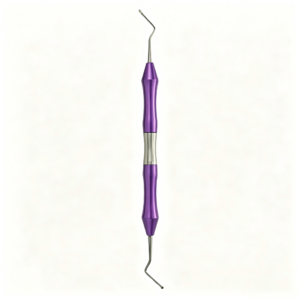
Double-ended plugger designs may provide two working-end sizes on one instrument.
Important buying considerations include:
working-end dimensions, angle, surface finish, handle grip and model identification.
For distributors, offering several plugger sizes can help build a more complete product family.
Endodontic Spreaders
Spreaders commonly feature narrow tapered tips.
They are designed for controlled manipulation during endodontic workflows.
Because the working ends may be very fine, manufacturing consistency is particularly important.
Buyers should inspect multiple samples and confirm the intended specification before bulk production.
Endodontic Excavators
Endodontic excavators may feature small spoon-like or shaped working ends.
Different designs can be selected according to the intended application.
Manufacturing considerations include working-end shape, edge finish, shaft angle and handle control.
Specialized Endodontic Hand Instruments
Not every endodontic instrument fits into the same category.
Specialized models may combine different working ends.
For example, one end may be designed for material placement while the other is intended for manipulation or access.
These instruments are particularly suitable for OEM development because manufacturers can customize working-end combinations according to customer requirements.
Why Handle Design Matters
Endodontic procedures often require fine instrument control.
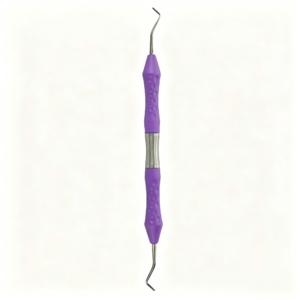
Handle diameter, grip texture and instrument balance may affect usability.
A textured handle can improve grip, while a smooth central area provides space for laser engraving.
Private-label brands often standardize handle design across their endodontic range to create a consistent appearance.
Building an Endodontic Instrument Set
Instead of purchasing individual instruments, clinics and distributors can develop complete endodontic sets.
A possible set may include:
explorer, plugger, spreader, excavator, specialized hand instrument and cassette.
The cassette can be configured according to the number and dimensions of the instruments.
Internal link:https://lxdent.com/accessories-cassettes/
Endodontic File Organizers
Endodontic accessories are also important.
File organizers can help arrange different file sizes and positions.
Color-coded or numbered layouts may make instrument organization easier.
These products can be sold separately or included as part of a broader endodontic product line.
OEM Endodontic Instruments
Dental brands may want to develop endodontic instruments under their own name.
OEM options can include:
custom working ends, handle designs, model codes, laser engraving, complete sets and packaging.
For custom projects, buyers should provide detailed drawings, reference samples or high-quality photographs.
The more precise the initial information, the easier it is to confirm manufacturing feasibility.
Private Label Branding
Brand consistency matters for distributors.
A well-developed private-label range may include the same logo position, handle style and packaging design across all endodontic instruments.
Model numbering is also useful.
For example, a company might organize the range into a sequential SKU system for explorers, pluggers and spreaders.
Quality Control for Endodontic Instruments
Fine working ends should be carefully inspected.
Quality control can include:
working-end geometry, shaft alignment, handle assembly, surface polishing, laser marking and final visual inspection.
For repeat orders, consistency between production batches is especially important.
Choosing a Manufacturer
A professional endodontic instrument manufacturer should be able to discuss both standard products and customized development.
For B2B buyers, useful questions include:
Can you provide product samples?
Can working-end geometry be customized?
Can we use our own logo?
Can instruments be supplied as a set?
Can a cassette be customized?
Can packaging be private labeled?
These questions help determine whether the supplier can support long-term product development.
Frequently Asked Questions
What are common endodontic hand instruments?
Explorers, pluggers, spreaders and excavators are common examples.
Can the working ends be customized?
Depending on design feasibility, customized working ends can be developed from samples or drawings.
Can endodontic instruments include a private-label logo?
Suitable stainless steel instruments can be laser marked.
Can instruments be supplied in a cassette?
Yes. Endodontic tools can be organized as procedure-based sets.
Conclusion
Endodontic instruments require precise working ends and consistent manufacturing.
Explorers, pluggers, spreaders and excavators each serve different functions, while customized sets help clinics and distributors organize products more effectively.